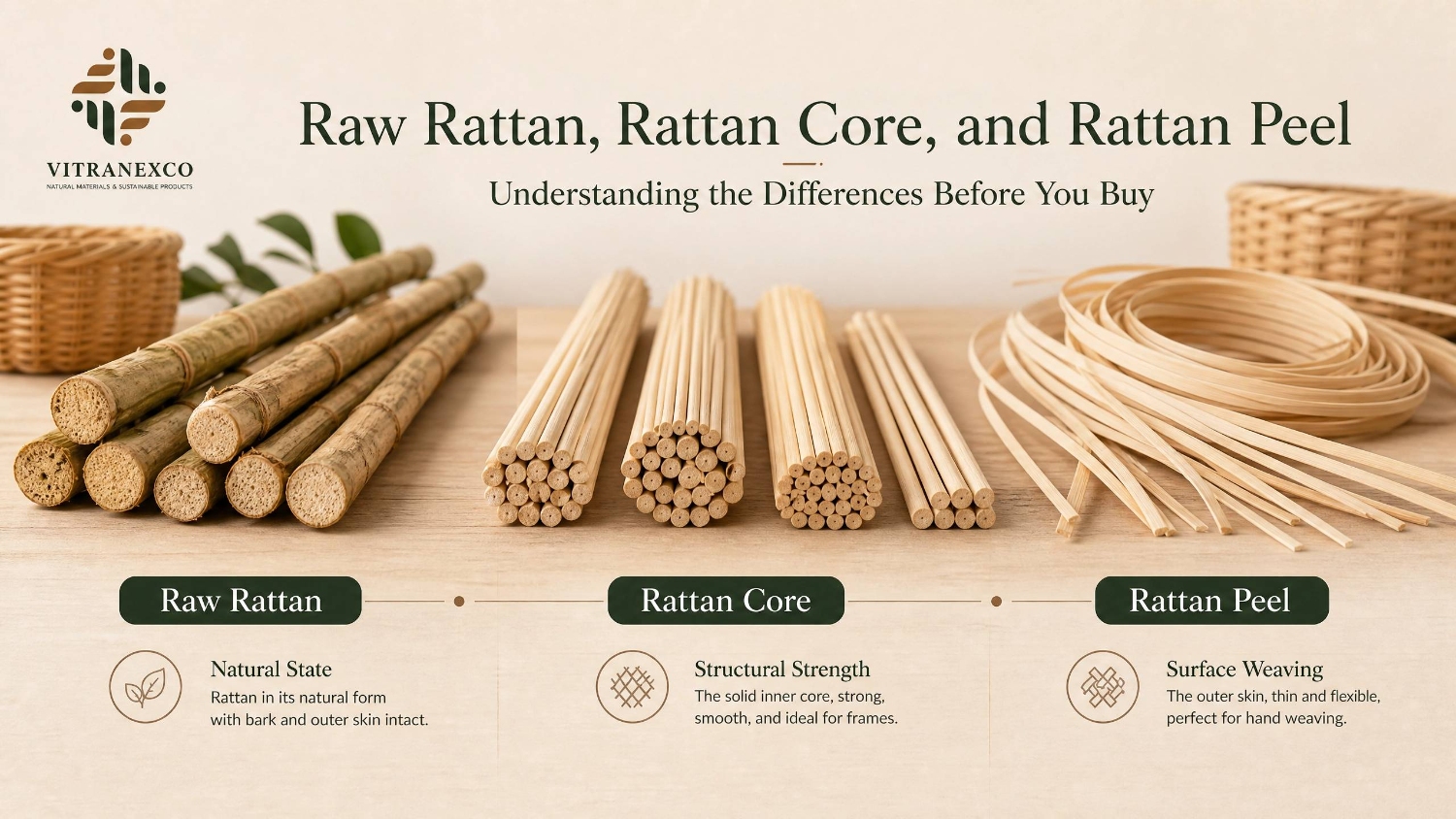
Choosing the wrong rattan material can increase production costs, create processing delays, and affect product quality. Understanding the differences between raw rattan, rattan core, and rattan peel helps manufacturers select the right material for each application.
When sourcing rattan materials, many buyers encounter terms such as raw rattan, rattan core, and rattan peel. Although all three originate from the same rattan plant, they serve very different purposes in furniture and handicraft production. Selecting the right material is important not only for product quality but also for production efficiency and cost control.
For manufacturers, wholesalers, and importers, understanding these differences can help avoid sourcing mistakes and ensure materials are suitable for their intended use.
Raw rattan refers to the whole rattan pole harvested from the forest before it is processed into smaller materials. It is the starting material used to produce a wide range of rattan products, including rattan core and rattan peel.
✦ Furniture frames and load-bearing structures.
✦ Structural components and decorative poles.
✦ Further industrial processing into split components.
Because raw rattan still requires additional processing, it is typically purchased by factories and manufacturers with their own production capabilities.

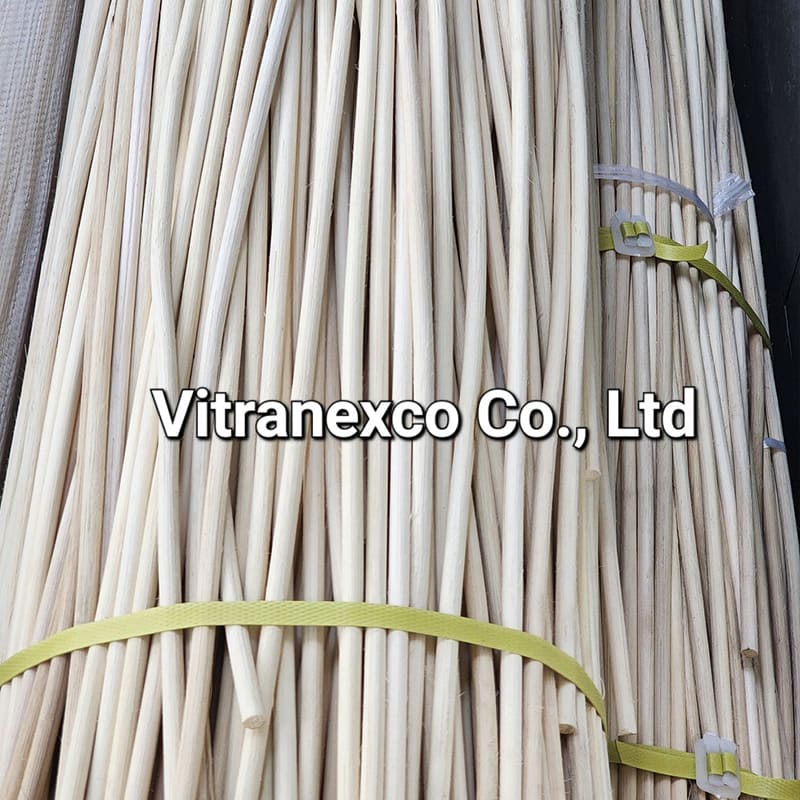
Rattan core is produced from the inner section of the rattan pole after the outer skin has been removed. It is one of the most commonly used materials in weaving applications because of its flexibility, uniform appearance, and ease of handling.
✦ Basket weaving, trays, and designer lampshades.
✦ Home décor products, storage systems, and woven furniture components.
Different diameters are available depending on the product requirements. Smaller sizes are suitable for intricate weaving, while larger diameters provide additional strength.
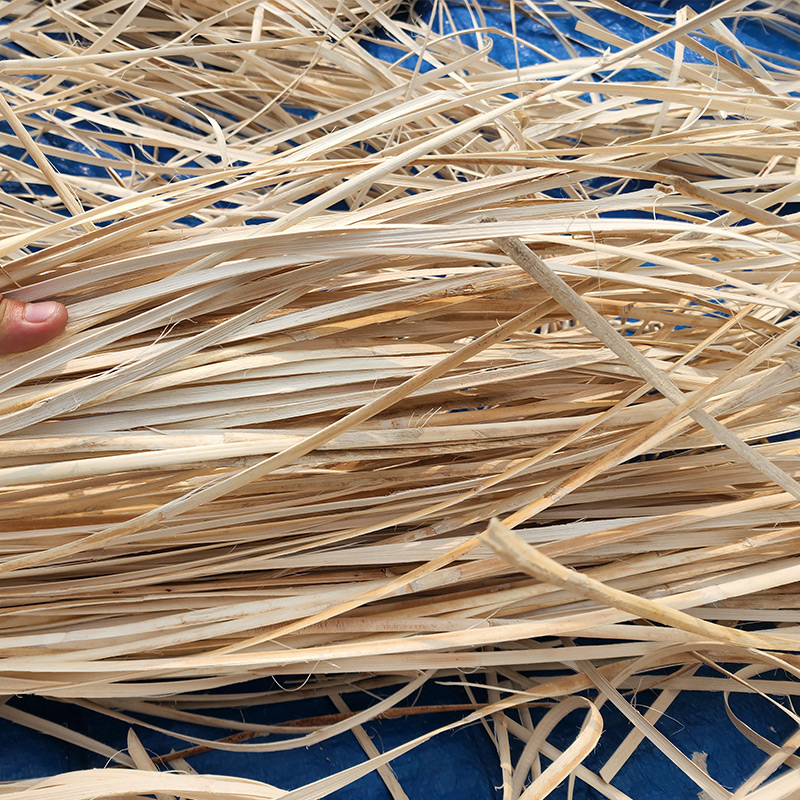
Rattan peel is the outer skin removed from the rattan pole during processing. Compared with rattan core, rattan peel offers higher tensile strength and is primarily used for binding and reinforcement.
✦ Wrapping furniture joints and securing vital structural connections.
✦ Reinforcing skeleton furniture frames and finishing decorative edges.
Rather than creating the main structure of a product, rattan peel helps improve durability and strengthen critical connection points.
Understanding the final end-use of each material variation streamlines global sourcing decisions and optimizes raw container space allocation.
Mainly utilized for rigid framing architectures like chair and sofa skeletons, broad coffee tables, premium headboards, and large structural interior design panels.
Integrated into highly flexible weaving applications such as household storage baskets, modern restaurant lampshades, serving trays, and intricate woven furniture panels.
Specifically allocated for high tensile reinforcement, including furniture joint wrapping, secure edge bindings, corner reinforcement, and small protective structural trims.
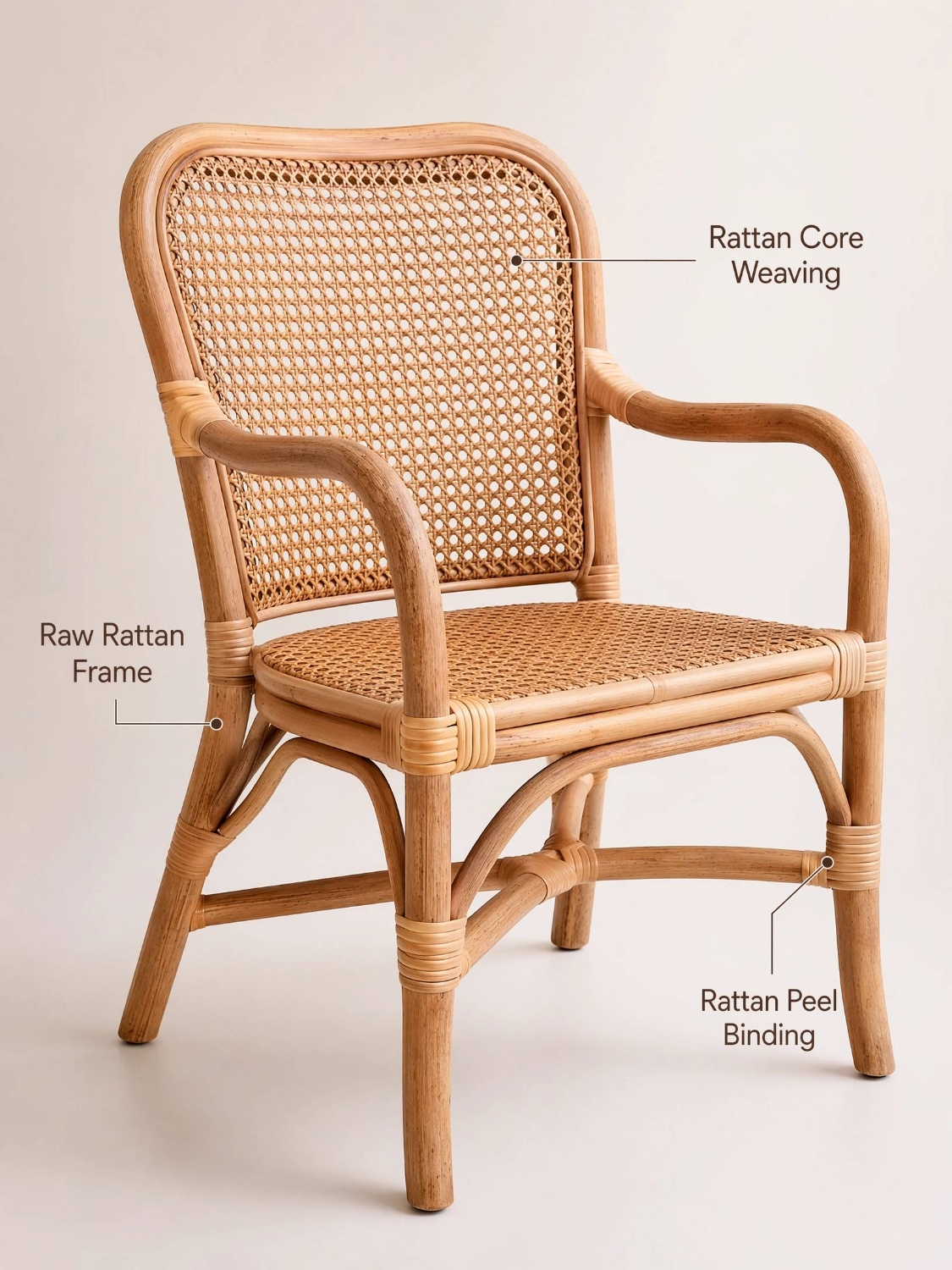
In professional furniture production, raw rattan, rattan core, and rattan peel are rarely treated as separate choices. Instead, they are engineered to complement each other inside a single cohesive item.
1. Raw Rattan forms the foundational furniture frame.
2. Rattan Core creates the comfortable woven surface paneling.
3. Rattan Peel wraps and firmly reinforces the critical framework joints.
By merging all three plant components together, export manufacturers lock in superior structural integrity, better item consistency, minimized factory defect ratios, and maximized field durability.
| Material | Main Function | Typical Applications |
|---|---|---|
| Raw Rattan | Structural material | Furniture frames, poles, raw industrial processing input. |
| Rattan Core | Weaving material | Baskets, modern lampshades, woven surface paneling. |
| Rattan Peel | Binding and reinforcement | Furniture joint wrapping, edge braids, structural support loops. |
Raw rattan, rattan core, and rattan peel are not competing materials. They are complementary parts of the exact same natural plant resource, each fulfilling a designated, specialized role in furniture and handicraft production. Understanding how these materials are processed and applied helps manufacturers make better sourcing decisions, improve production efficiency, and achieve more consistent product quality.
At Vitranexco, we supply a wide range of premium Vietnamese rattan materials, including raw rattan, precisely split rattan core, and high-tensile rattan peel, to support manufacturers and wholesalers worldwide. Contact our global sales team today to plan your logistics distribution.
Global Logistics Fulfillment: 7 - 15 Days