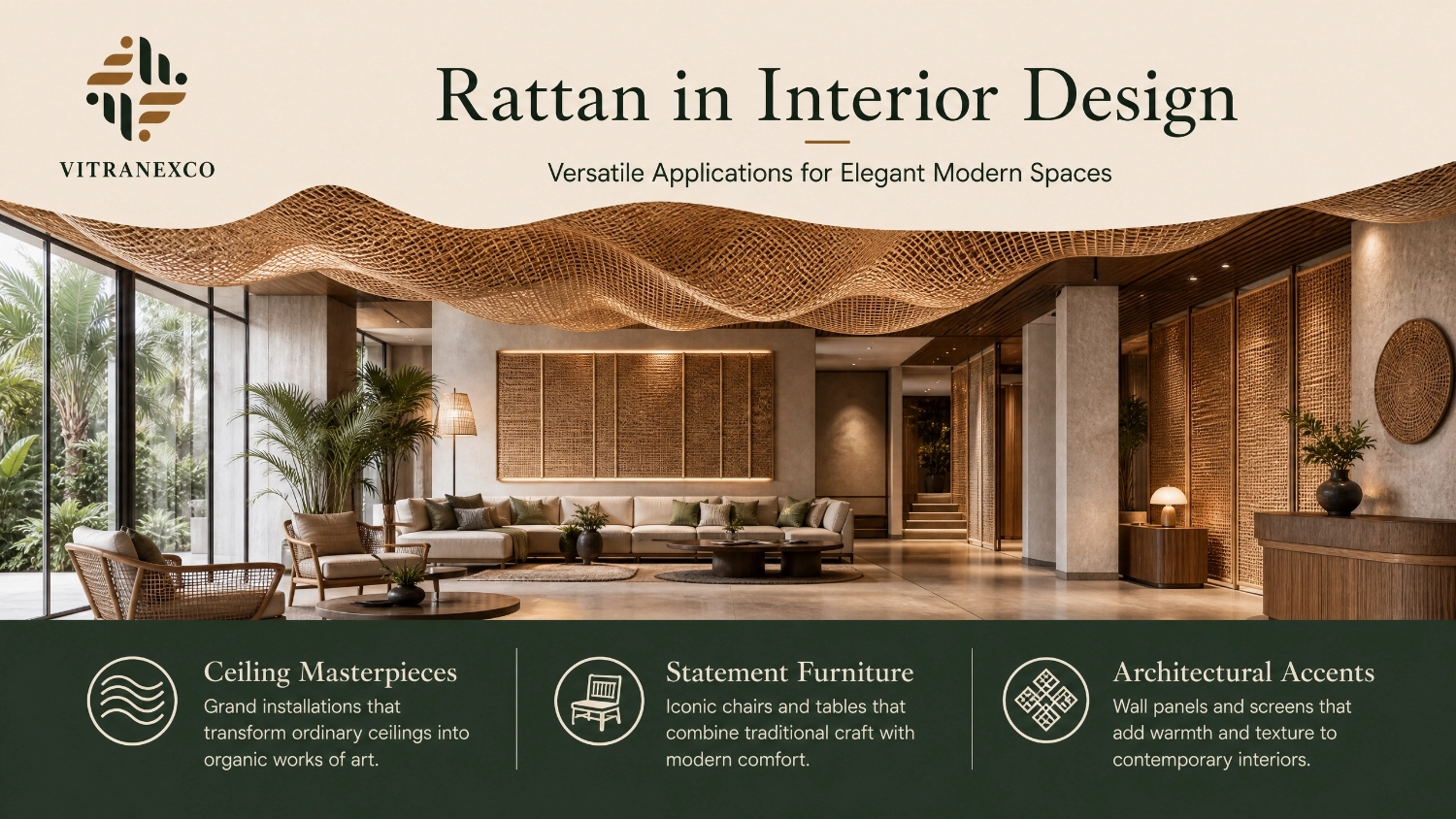
"In contemporary spatial design, materials dictate how human beings perceive an environment. Natural rattan functions not as a decorative afterthought, but as a living structural element that softens architectural rigidity."
For architectural studios, hospitality developers, and premium furniture manufacturers, spatial composition is driven by both visual impact and environmental responsiveness. In highly structured spaces dominated by concrete, glass, and engineered surfaces, natural rattan acts as a critical counterweight. It introduces organic softness, cross-style compatibility, and an authentic tactile language that synthetic alternatives cannot replicate.
“Rattan is not just a surface coating; it is a structural component that balances light, airflow, and spatial weight.”
— The Architectural Matrix
| Sector | Primary Applications | Structural Design Objective |
|---|---|---|
| Residential Interiors | Lounge seating, cabinet front panels, woven storage inserts, hybrid coffee tables. | Introduces warmth and breaks visual rigidity within hard-surface envelopes. |
| Dining & Kitchen | Woven dining chairs, pendant lighting shades, semi-open architectural partitions. | Establishes semi-transparent boundaries that support light transmission and airflow. |
| Rest Environments | Woven headboards, bedside accents, sliding wardrobe doors, glare-reducing fixtures. | Reinforces atmospheric calm through tactile softness and micro-diffused illumination. |
| Hospitality & B2B | High-traffic restaurant seating, boutique hotel lounges, experiential retail displays. | Communicates natural authenticity and premium brand identity to consumers. |
Modern architecture favors the unhindered flow of light and air. In open-plan residential and hospitality spaces, implementing solid partitions creates restrictive blockades. Rattan weaving solves this spatial bottleneck. Its natural semi-transparent structure allows light filtration and constant cross-ventilation. Whether integrated into minimalist, Japandi, or organic modern design systems, rattan acts as a connective tissue rather than a barrier.
In contemporary commercial and residential design, rattan is rarely deployed in isolation. Instead, engineers and interior planners place it within mixed-material matrices. Combining rigid metal framing with flexible rattan infills provides high structural clarity while offering extreme tensile comfort. When paired alongside cold glass panels or cast concrete architectural elements, rattan establishes a stark sensory contrast that elevates the overall luxury perception of the space.
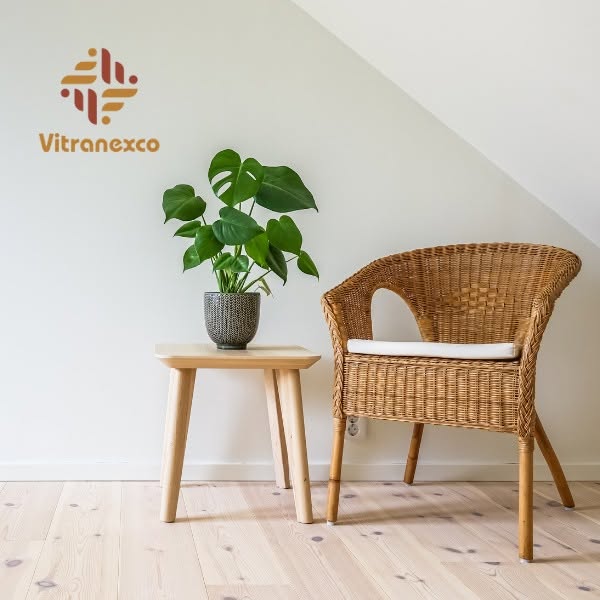
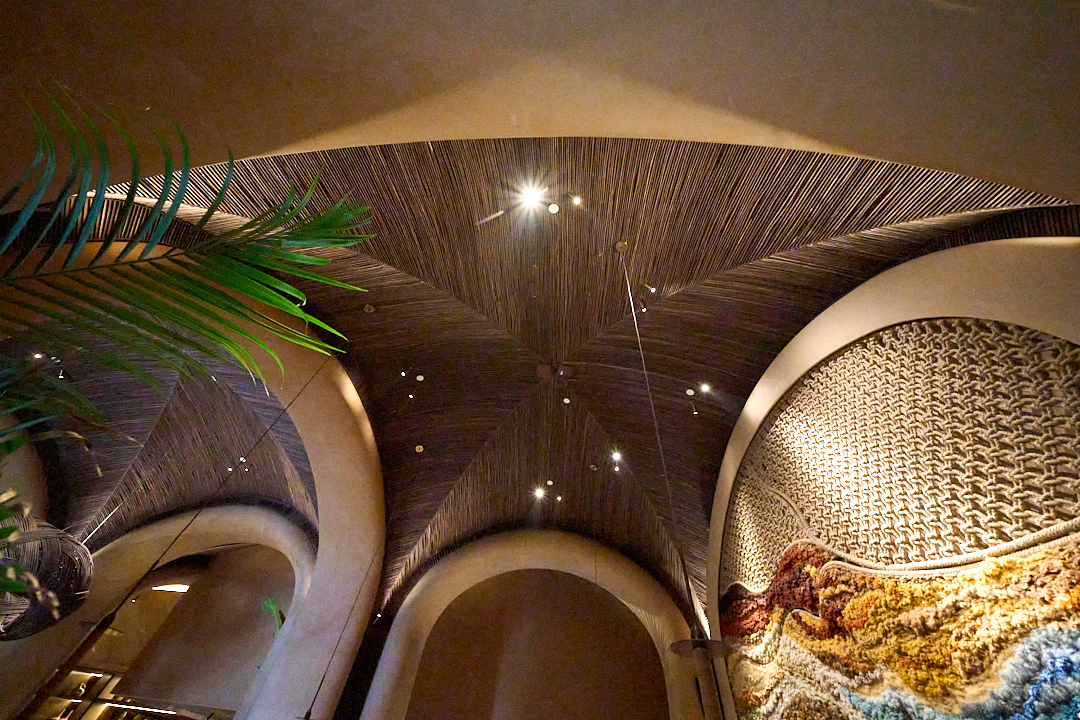
The persistence of rattan in global design standards stems from its unique physics. It functions efficiently across multiple processing vectors—from industrial scale furniture production to custom architectural installations. Because it responds optimally to environmental shifts and offers intrinsic kinetic dampening, it delivers a superior, long-term user experience that completely outclasses rigid synthetic configurations.
Optimize your production line with high-consistency, premium Vietnamese natural rattan core. Engineered to meet strict international standards for high-end furniture manufacturing and B2B projects.
Global Wholesale Orders & Consultations
