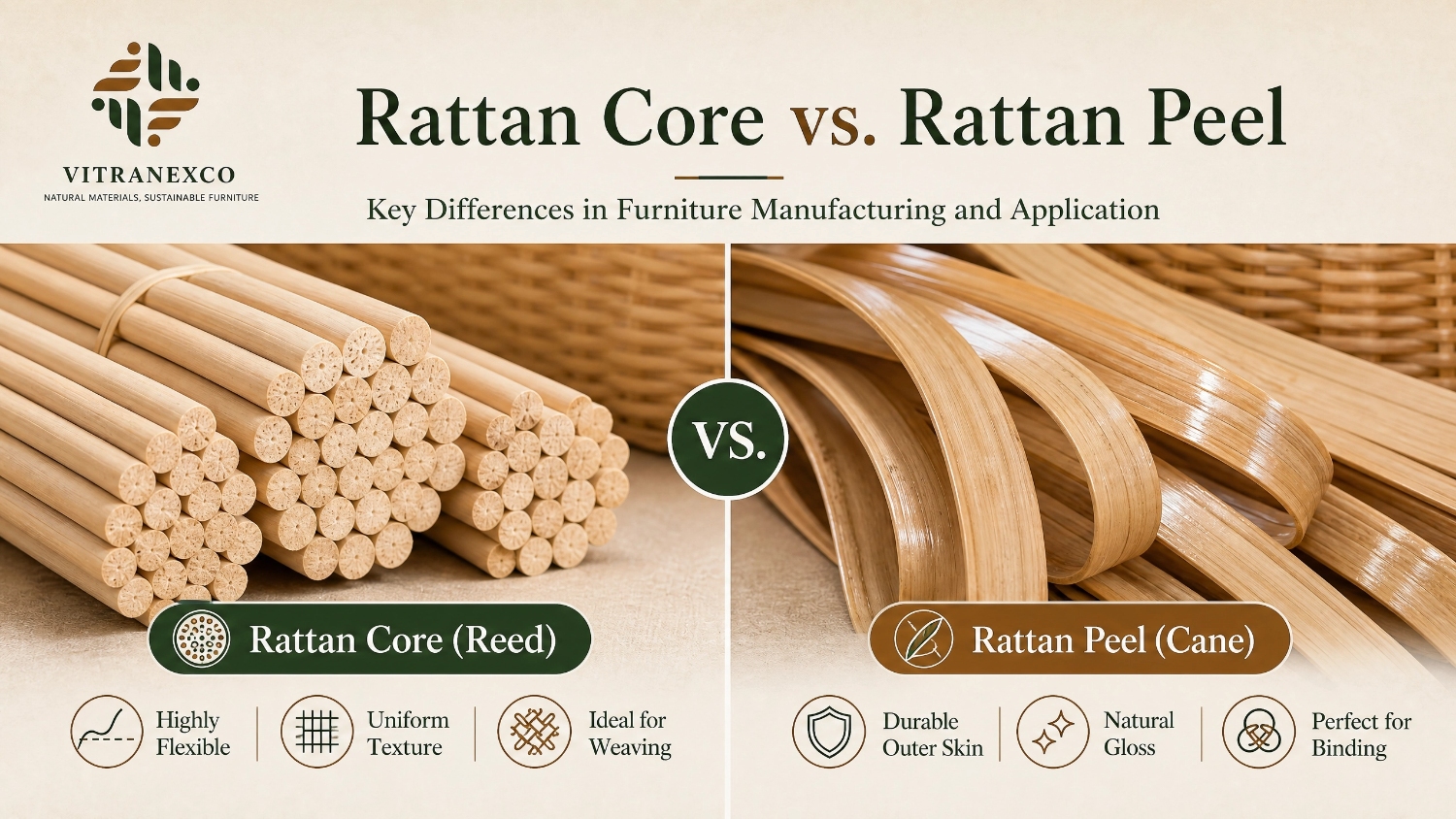
In rattan-based furniture production, “rattan core” and “rattan peel” are often mentioned together. However, they serve completely different functions in manufacturing.
Understanding this distinction is crucially important for selecting the right raw material for each specific production stage. At Vitranexco, we supply premium processed Vietnamese rattan materials to help international factories maintain a stable, high-efficiency furniture manufacturing pipeline.
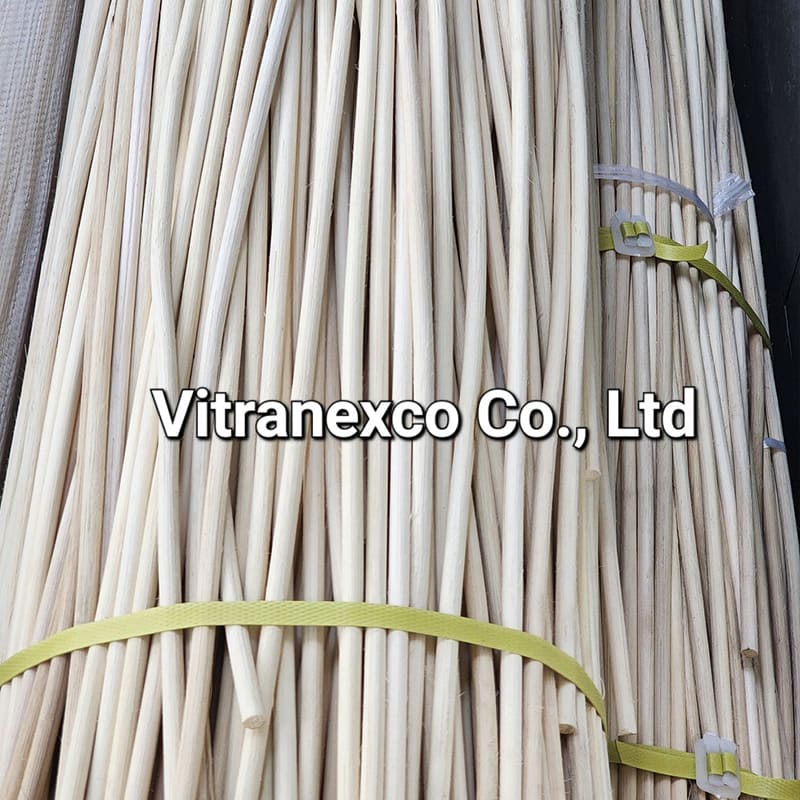
Rattan core is the inner part of the rattan stem. It is typically processed into round or flat strands and used as the main structural or weaving material. Core material is highly valued for its uniform flexibility, consistent diameter (when properly graded), and ease of weaving after soaking or processing.
✦ Primary Applications: Large frame weaving, structural weaving parts, chair seats, and sturdy backrests.
✦ Decorative Use: Commercial basketry, intricate screens, and modern decorative accent weaving.
✦ Processing Advantage: Highly compatible with both automated machine-assisted and complex hand weaving applications.
Rattan peel is the outer skin layer of the rattan stem. It is significantly thinner, denser, and stronger in tension compared to the core. Peel is not typically used for full weaving structures, but rather for reinforcement and finishing where absolute strength and tight binding are required.
✦ Joint Binding: Wrapping load-bearing structural connections and anchoring heavy wicker frames.
✦ Edge Protection: Reinforcing heavy-use furniture edges and borders from wear and friction.
✦ Aesthetic Accent: Creating sleek, glossy decorative finishing lines that define high-end furniture aesthetics.
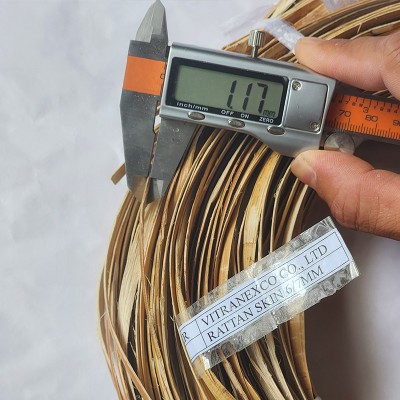
Core provides the intricate shape, curvature, and dimensional mass, while peel supplies the unyielding tensile grip required at stress connection points.
A classic rule of thumb in high-end design: Core = Structure & Weaving, whereas Peel = Secure Binding & Reinforcement.
Correctly mapping machine processing for uniform core strands vs specialized manual wrapping with flat peel guarantees optimal assembly-line speed.
Misplacing material roles accelerates joint loosening. Defining clear structural boundaries at the blueprint stage yields stable, lifetime heirloom quality.
"Rattan core and rattan peel are not interchangeable materials. Each plays a distinct, non-negotiable role in industrial furniture manufacturing. For stable production yields and flawless structural results, factories must dictate exact usage from early prototyping."
Optimize your factory's output with Vitranexco’s strictly graded rattan core and peel selections. Contact our commercial export division today for wholesale quotes and material consultations.
Lead Time: 7 - 15 days
