How Processed Vietnamese Rattan Improves Manufacturing Stability
- Wednesday - 10/06/2026 07:00
- Close page
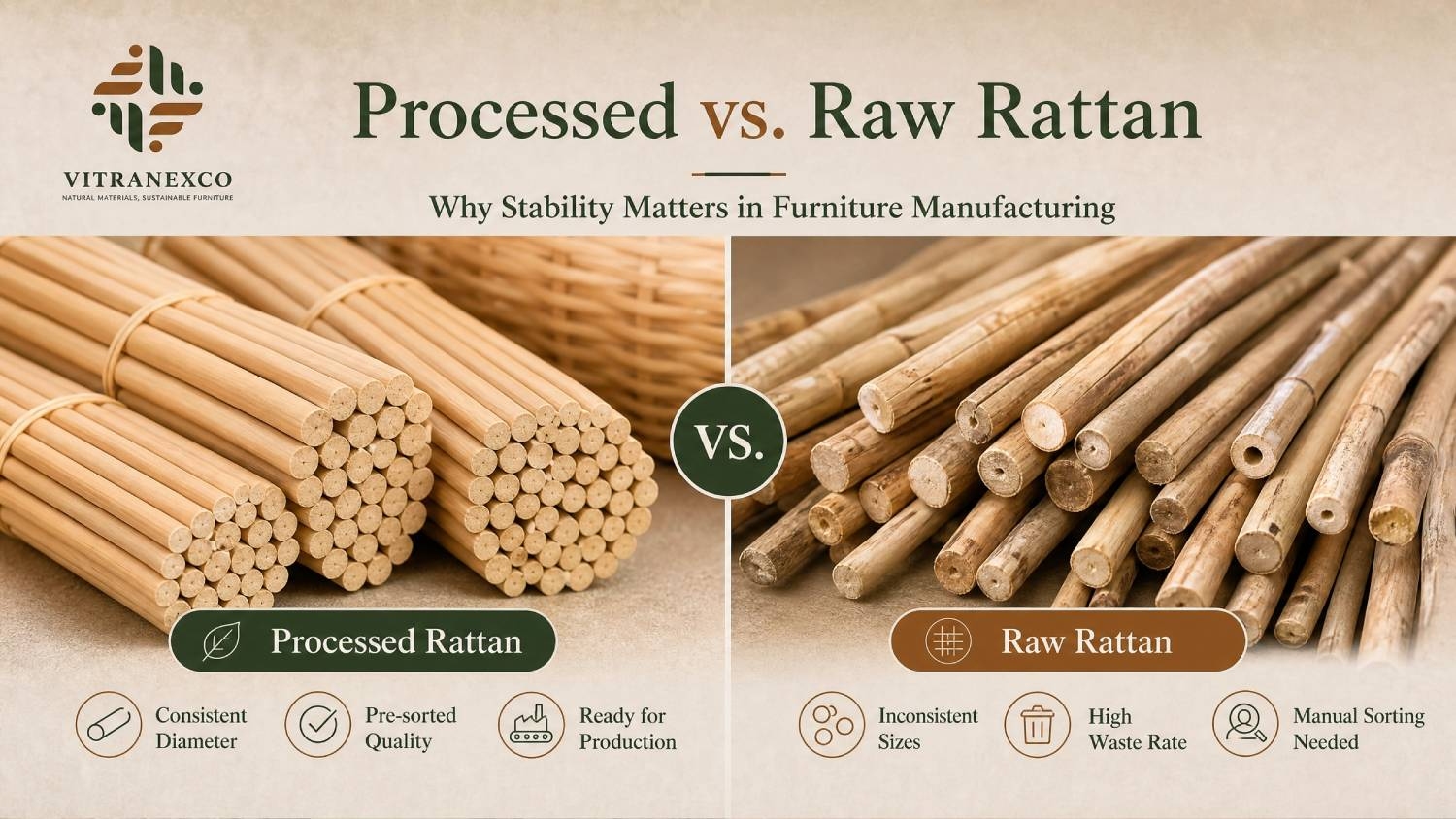
In furniture manufacturing, material inconsistency is one of the most common operational challenges. Even small variations in moisture content, density, or dimension can affect weaving performance, increase defect rates, and disrupt production schedules. For large-scale furniture brands, these issues directly impact cost efficiency and delivery reliability.
The Challenge of Natural Rattan in Production
Natural rattan, when used in its raw form, is highly sensitive to environmental conditions. Without proper industrial grading and specialized treatment, manufacturers frequently struggle with unpredictable material behavior on the production floor.
✦ Uneven moisture levels leading to severe warp and deformation during assembly.
✦ Unpredictable diameter & flexibility fluctuations across different raw batches.
✦ Increased pre-processing overheads before artisans can begin the weaving phase.
✦ Elevated defect rates resulting in costly factory rework and material waste.

The Role of Processing in Material Stability
Vietnamese rattan is not used only in its raw form but is carefully processed to improve stability for industrial applications. Through controlled boiling, drying, splitting, and grading, the material is refined into highly consistent rattan core and rattan peel.
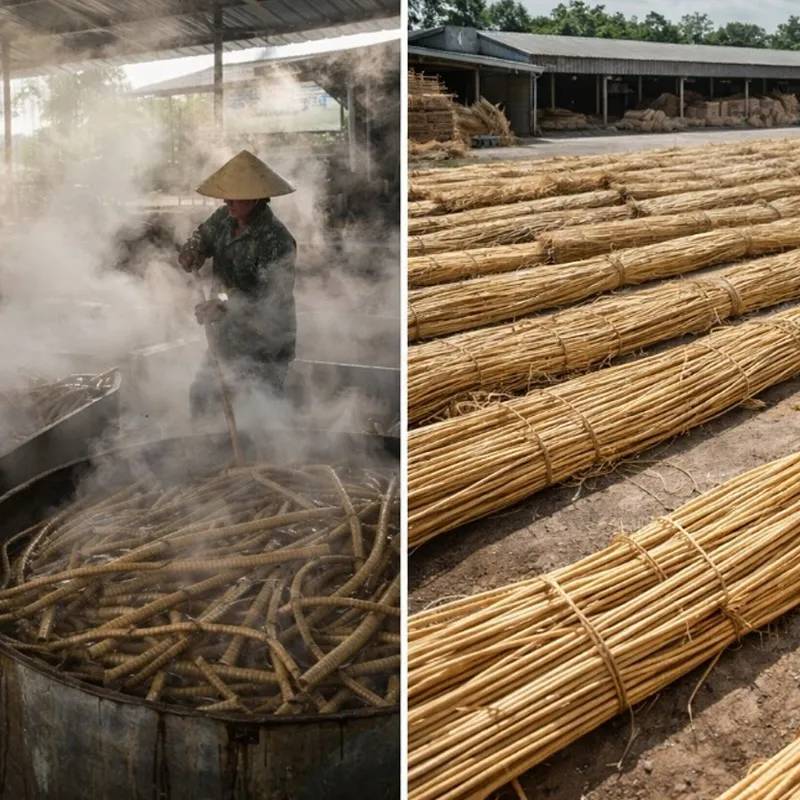
1. Controlled Boiling
Cures the core, removes natural sugars, and protects fibers against future insect attacks.

2. Precision Drying
Stabilizes internal moisture percentages to prevent shrinkage and molding post-production.
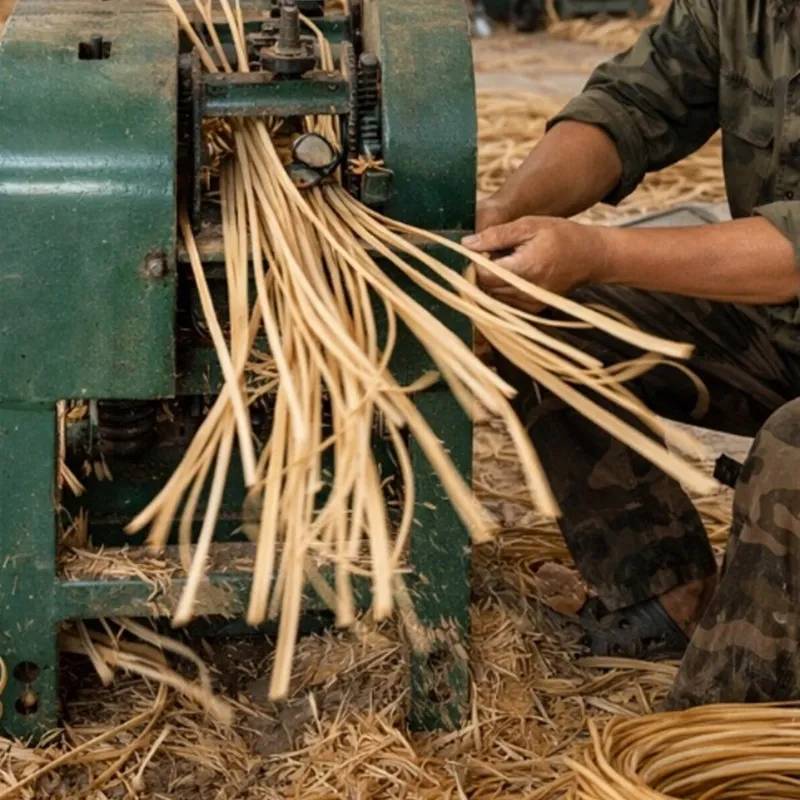
3. Splitting & Sizing
Refines raw vines into exact linear dimensions—from fine 1.5mm reeds up to thick framing cores.
This structured processing methodology guarantees:
- More uniform material properties across diverse high-volume supply batches.
- Better moisture control optimized for long-term durability in varied global climates.
- Improved compatibility with both modern mechanical tooling and traditional hand weaving.
- Reduced preparation time on active manufacturing lines, bypassing tedious sorted picking.
Impact on Production Efficiency
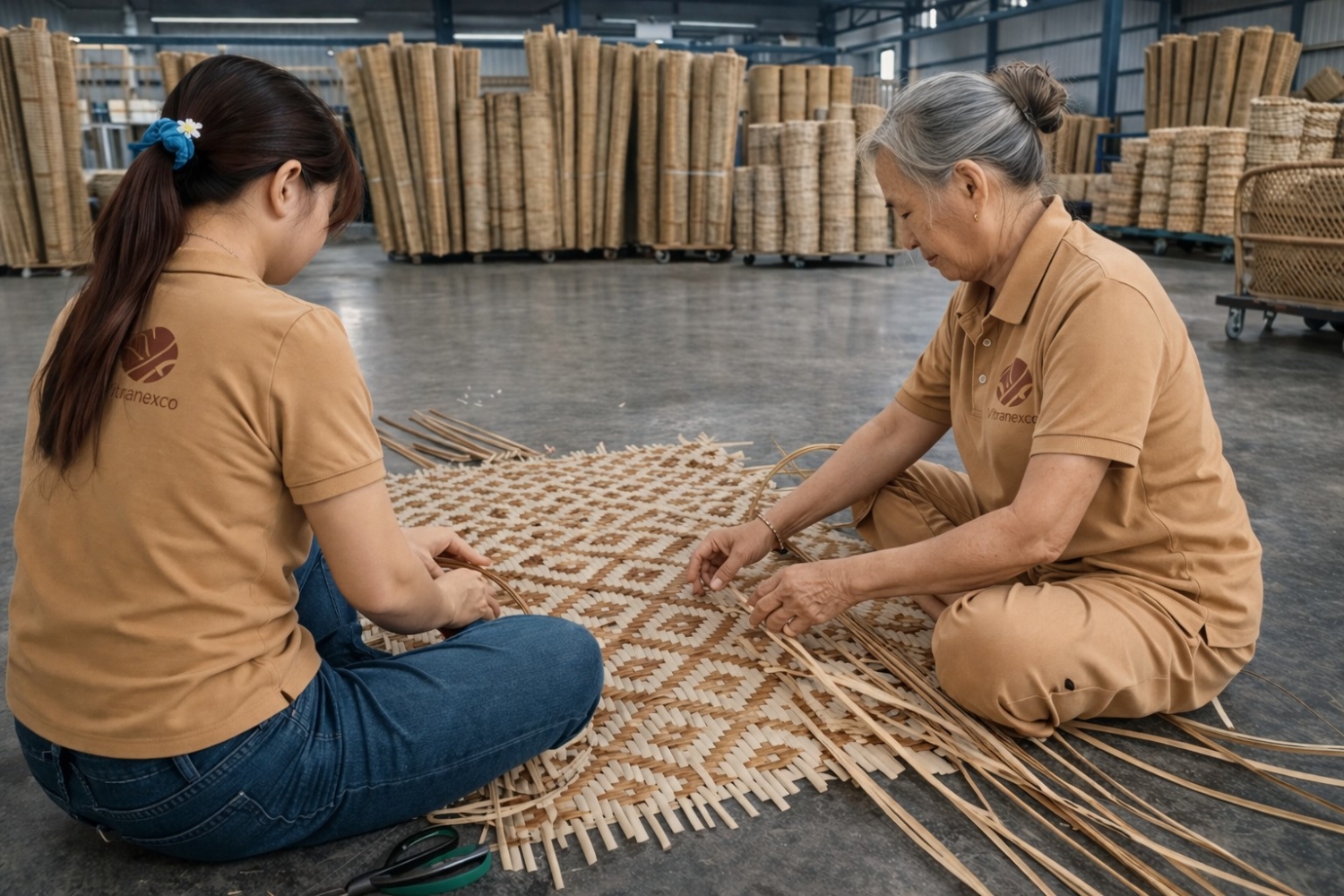
Stable and processed rattan has a direct impact on manufacturing performance. By eliminating material unpredictability at the initial phase, factories can run linear, uninterrupted operational shifts.
Furniture producers benefit from lower defect and rejection rates, minimized downtime caused by constant mechanical re-adjustments, and vastly superior consistency in final product aesthetics. These compounding factors elevate overall factory output—a critical differentiator for export-oriented facilities managing substantial, multi-container contract orders.
Cost Efficiency in Large-Scale Operations
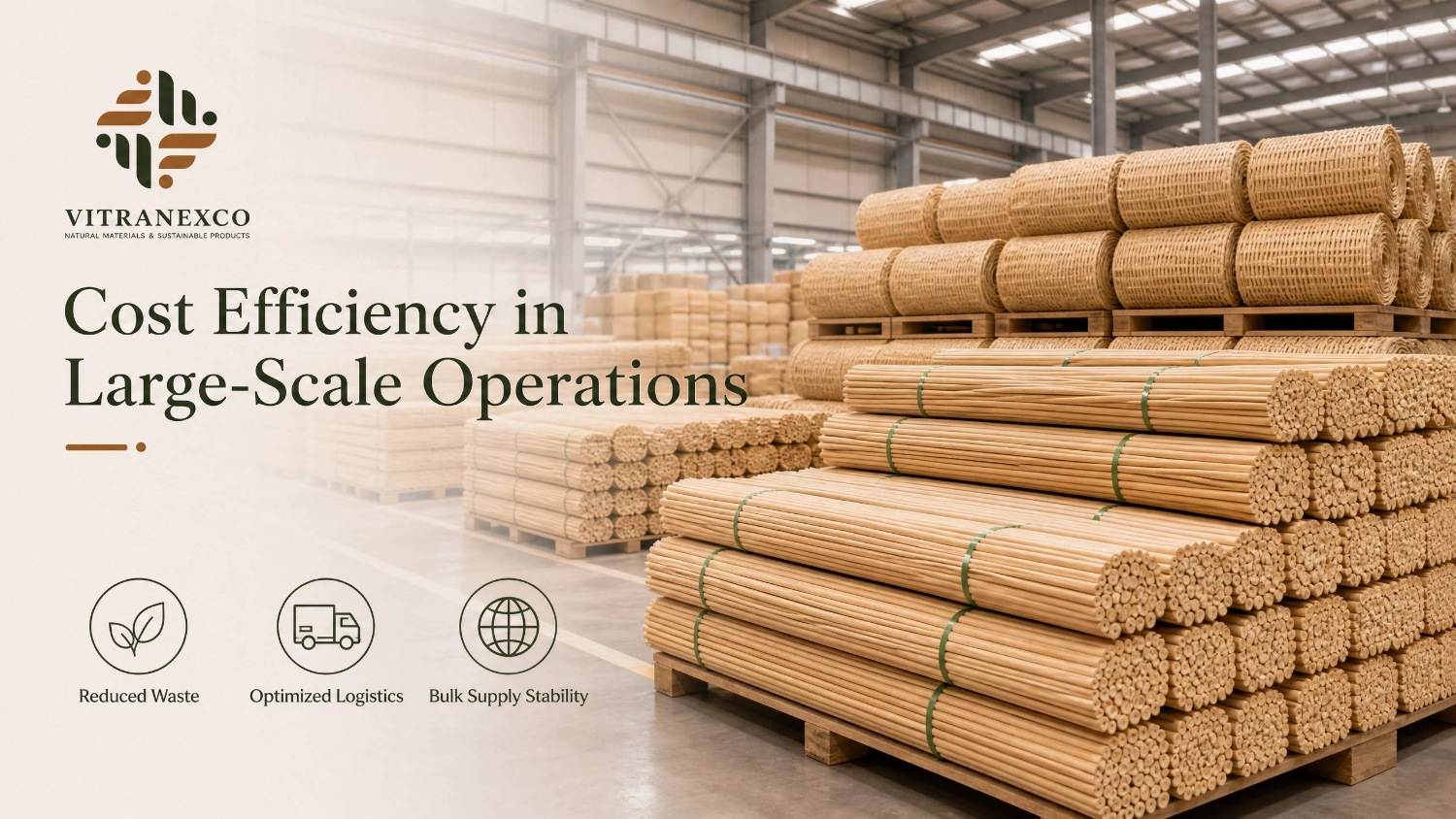
Material instability often leads to hidden operational costs, including scrap waste, unexpected workshop delays, and missed shipping deadlines. By onboarding processed rattan built to strict linear metrics, procurement teams mitigate these invisible financial leaks.
Measurable Material Optimization
In audited configurations, utilizing precisely graded Vietnamese core results in an average 10% to 25% improvement in material cost efficiency. This optimization stems from lowered workshop waste volumes and streamlined production velocity rather than compromised raw procurement costs.
Conclusion
In modern furniture production, physical consistency is just as vital as the geographic origin of the fiber. Processed Vietnamese rattan offers an engineered, reliable raw input that directly reduces production line volatility and elevates operating margins.
For major furniture brands and export suppliers looking to preserve brand reputation and secure absolute cost control, switching to industrially standardized processed rattan is a strategic upgrade for supply chain performance.

Secure Your Rattan Supply with Vitranexco
Partner with Vietnam's premier specialized exporter of stabilized rattan core and peel materials. Contact our international wholesale division today to coordinate custom dimensions, test raw samples, or secure factory-direct pricing for your manufacturing operations.
Industrial Fulfillment Lead Time: 7 - 15 Days